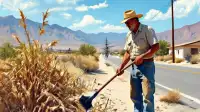

More than a century ago, the Owens Valley became the battleground for a conflict over water rights that continues to shape communities across California, particularly here in Inyo County. The City of Los Angeles, driven by rapid population growth, orchestrated a massive water diversion project led by engineer William Mulholland, acquiring land and water rights in the Owens Valley to feed its burgeoning metropolis. This historical maneuver, which saw the construction of the Los Angeles Aqueduct, dramatically impacted the valley's residents and environment, setting precedents for water control that persist to this day. Faced with dwindling resources and legal challenges, Owens Valley residents eventually resorted to desperate measures, including the bombing of the aqueduct, to resist the widespread drainage of their vital water.
The seeds of this conflict were sown in 1904 when Mulholland, then head of what would become the Los Angeles Department of Water and Power (LADWP), visited the Owens Valley. He observed abundant water flowing from the Sierra Nevada's melting snowcaps, a resource he deemed essential for a growing Los Angeles, which at the time depended solely on local rainfall and snowfall. A former Los Angeles mayor, Fred Eaton, who accompanied Mulholland on this trip, began secretly acquiring significant portions of Owens Valley land. In 1905, Eaton purchased the Rickey Cattle Company, encompassing approximately 50,000 acres of water-bearing land, without the local residents understanding his true intentions.
Once the plan to divert water from the Owens Valley became public, residents reacted with anger and outrage. The LA Times' revelation of Eaton's scheme led to confrontations, with a mob reportedly running Eaton and his son out of one of the valley's small towns. It took about a decade to complete the aqueduct, which spanned over 200 miles, successfully channeling Owens Valley water to Los Angeles and leading to a period where the city was "flush with water."
However, Los Angeles's population continued to grow, quickly exceeding the supply from the initial land purchases. The City of Los Angeles returned to the Owens Valley to secure more land and water rights, intensifying the strain on the local community. As a result, water tables in the Owens Valley plummeted, farms produced less, the local economy faltered, and investment dried up. Banks refused loans, and local schools were forced to close, according to reports. Residents and farmers attempted to negotiate with the City of Los Angeles, but these talks yielded no progress. In 1924, the City of Los Angeles sued a long list of farmers, asserting that they were illegally diverting water that rightfully belonged to the city.
Feeling that legal avenues offered no recourse, Owens Valley residents took matters into their own hands, bombing a portion of the aqueduct. Despite Mulholland's efforts to identify those responsible, no one was ever turned in. Farmers watched as 300,000,000 gallons of water were drained daily from their valley. Ultimately, Los Angeles gained control of 90% of the Owens Valley's water resources. With the Owens Valley being progressively drained and Los Angeles's population still growing, Mulholland eventually sought additional water from the Colorado River to supply the distant city.
The Los Angeles Department of Water and Power acknowledges Mulholland as a figure whose "life was devoted to public service," crediting him with furnishing the "vital element to Los Angeles." While his engineering prowess undeniably enabled Los Angeles's survival and growth, the perspective from the Owens Valley has long been one of stolen resources. Mulholland's agreements consistently prioritized Los Angeles, leaving communities outside its immediate water supply vulnerable to the impacts of these arrangements.
This historical framework continues to shape contemporary water issues, even in areas outside the Owens Valley. For example, a project designed to capture rainwater and ice melt from a local wash and divert it into the ground to replenish groundwater faced a significant hurdle. Even though this water freely flows through the valley and would otherwise reach the ocean without reclamation, the Los Angeles Department of Water and Power maintained that any entity capturing this water would have to pay them for it. This position stems directly from the agreements Mulholland made over a century ago, which granted the City of Los Angeles ownership of this water, without requiring its constructive or useful deployment by the city itself.
As residents look towards potential future rainfall, and with the governor having issued a state of emergency to prepare for possible historic rainfall, the implications of these long-standing water rights agreements are clearly felt. The inability for communities to retain and manage naturally occurring local water for their own groundwater replenishment, due to historical agreements, underscores the enduring legacy of the Owens Valley water wars.